3A Hair Type: How to Identify Your Curl Pattern and Build a Routine
You shampoo, condition, and scrunch. But by midday your curls are either a frizzy halo or completely flat. Sound familiar? You might have 3A hair, and you’re probably following a routine that wasn’t built for your curl pattern.
Here’s the thing: 3A curls are genuinely beautiful, but they have specific needs that generic curly hair advice skips over. By the end of this guide, you’ll know exactly how to identify your curl type, what your hair actually needs, and which products will finally give you those defined, bouncy spirals you keep seeing online.
Your 3A Hair Roadmap
- 3A curls form loose S-shaped spirals about the width of a piece of chalk: bouncy but prone to frizz and dryness
- Hydration is the top priority: sulfate-free shampoo plus leave-in conditioner every wash day
- Use lightweight products only. Heavy butters and oils flatten your curl pattern
- Air-dry or diffuse on low heat; never brush dry curls
Headline
- 1 What Is 3A Hair? (And How to Identify Your Curl Type)
- 2 What Are the Main Challenges of 3A Curls?
- 3 The 3A Hair Care Routine, Step by Step
- 4 Best Ingredients and Products for 3A Hair
- 5 Does Hair Porosity Change Your 3A Routine?
- 6 3A Hair Styling Tips and Hairstyle Ideas
- 7 Frequently Asked Questions
- 8 Conclusion
What Is 3A Hair? (And How to Identify Your Curl Type)
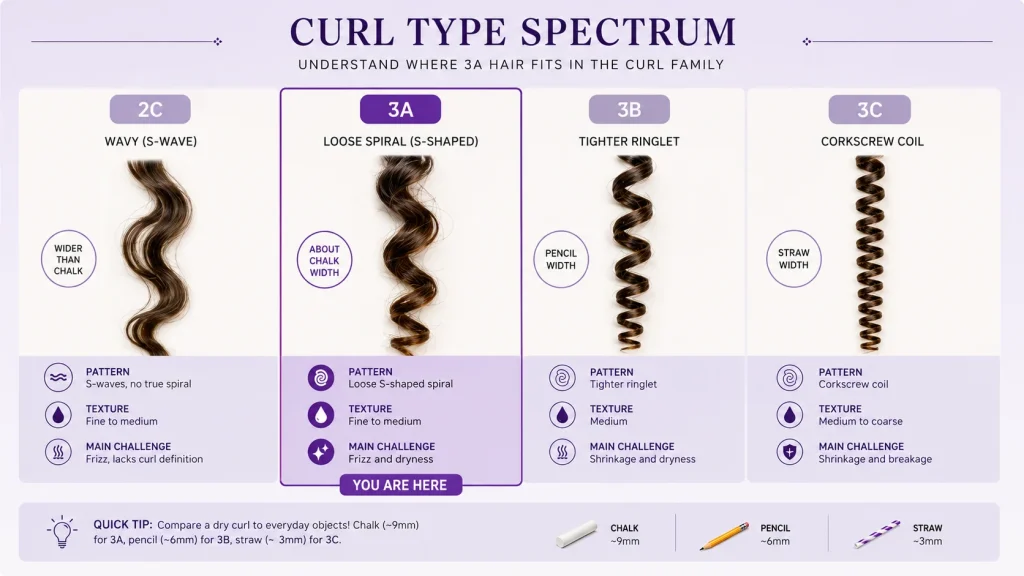
3A hair features large, loose S-shaped spirals about the diameter of a piece of sidewalk chalk. It’s the loosest curl type in the Type 3 category, sitting between wavy 2C hair and the tighter ringlets of 3B. The strands are usually fine to medium in thickness, with natural volume that makes the hair look full even without products.
Here’s the quickest at-home test: hold a piece of chalk next to one of your dry curls. If the curl diameter matches the chalk width (roughly 9mm), you’re looking at 3A.
When your hair is wet, 3A and 2C hair can look almost identical. The difference shows up when your hair dries fully. 2C forms soft S-waves without a true spiral. 3A forms a defined loose spiral that coils consistently from root to tip. If you want a broader look at the full curl typing system, our guide covers every type from 2A to 4C.
| Curl Type | Width | Pattern | Main Challenge |
|---|---|---|---|
| 2C | Wider than chalk | S-wave, no true spiral | Frizz, lacks curl definition |
| 3A | ~Chalk width | Loose S-spiral | Frizz and dryness |
| 3B | Pencil width | Tighter ringlet | Shrinkage and dryness |
| 3C | Straw width | Corkscrew coil | Shrinkage and breakage |
What Are the Main Challenges of 3A Curls?
3A curls face three core challenges: frizz, dryness, and definition loss. All three share the same root cause. The S-shaped curl pattern makes it harder for scalp oils (sebum) to travel from root to tip, so your ends stay dry no matter how often you condition.
According to curl specialists cited in Women’s Health, curly and wavy hair types are naturally drier because sebum must travel along a spiral path, slowing oil distribution along the full length of the hair.
Frizz is the most visible problem. When the hair cuticle is dry, it raises and absorbs moisture from the air unevenly. In humidity, the outer layer of your curl absorbs water faster than the inside, causing strands to puff and separate. The result is that halo of frizz around your head by midday.



Dryness at the ends happens because sebum simply doesn’t make the journey down a spiral the same way it travels down straight hair. Your roots feel fine; your ends feel like straw.
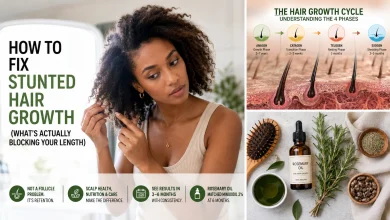
Definition loss is often caused by product buildup, gravity, or sleeping on your curls without protection. If you want practical tips for keeping frizz under control through season changes, read our guide on how to fix stunted hair growth and maintain curl health.
The 3A Frizz Cycle: Dry hair cuticle raises, absorbs humidity from the air, puffs and separates, looks dull and undefined by afternoon.
The 3A Hair Care Routine, Step by Step
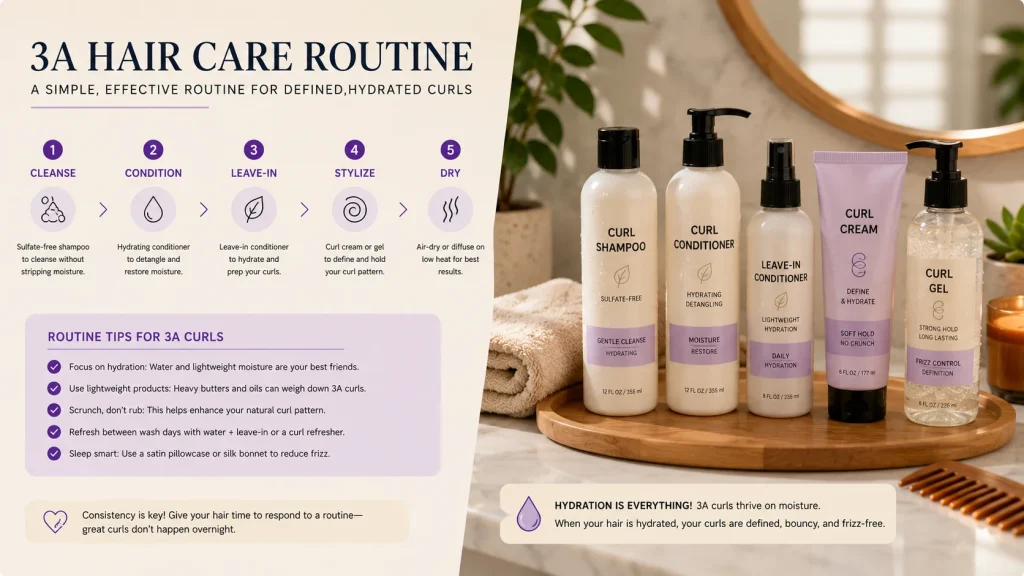
A consistent 3A routine has four steps: sulfate-free cleanse, deep conditioning, leave-in moisture, and lightweight hold. Do them in that order every wash day and you’ll see your curls shift from frizzy and flat to defined and bouncy within a few weeks.
Step 1: Wash (2 to 3 Times Per Week)
Use sulfate-free shampoo only. Sulfates (specifically SLS and SLES) strip your natural oils and leave curls dry and frizzy. Multiple curl specialists and brands including Prose, Davines, and GK Hair point to sulfate-free cleansing as the single most important switch for curly hair. Wash with cool or lukewarm water; hot water forces the cuticle open and accelerates moisture loss. Focus shampoo on your scalp and let it rinse through the lengths without scrubbing.
Step 2: Condition Every Wash Day
Apply a moisturizing conditioner from mid-length to ends. Detangle using a wide-tooth comb or your fingers while the conditioner is in; never brush dry. Leave it in for 3 to 5 minutes before rinsing. For drier 3A hair, a deep conditioning mask once every two weeks makes a real difference in how your curls hold moisture between wash days.
Step 3: Leave-In and Styling on Soaking Wet Hair
This step is where most 3A routines go wrong. Apply your leave-in conditioner while your hair is still dripping wet, not just damp. The water acts as the base layer; the leave-in seals it in. Then layer a lightweight curl cream or mousse on top. Scrunch the product upward into the curl; don’t rub or smooth it down. If you use a gel for extra hold, scrunch it in last.
Step 4: Dry Without Touching
Air-drying is the best option for maintaining curl integrity. If you need to speed things up, use a diffuser attachment on low heat. Cup sections of hair into the diffuser bowl and scrunch upward; don’t drag the dryer down the length of your hair. If you used gel and your curls feel crunchy once dry, scrunch them gently with your hands to release the cast. This is called “scrunch out the crunch” (SOTC) in the Curly Girl Method community, and it’s how you get soft, defined curls without crunch.
At night, put your hair into a loose, high ponytail called the pineapple method. It keeps your curl shape intact while you sleep and cuts your morning refresh time in half.
Best Ingredients and Products for 3A Hair
3A curls thrive on hydration and lightweight hold. The ingredients in your products matter more than the brand name on the label. Choose the right ones and you get defined, bouncy curls. Choose the wrong ones and you get a frizzy, flat result no matter how carefully you follow your routine.
Ingredients to Look For
Humectants draw moisture from the air into your hair shaft. Glycerin is the most common, followed by aloe vera and honey. One important note on glycerin: in cold, dry weather when the dew point drops below about 35°F (2°C), glycerin can pull moisture out of your hair instead of drawing it in. This is a common reason 3A hair feels worse in winter. If you live somewhere cold, switch to glycerin-free products from late autumn through early spring.
Lightweight oils like argan oil and jojoba oil add shine and help seal the cuticle without weighing your curls down. Argan oil in particular sits at a weight that works well for fine-to-medium 3A strands.
Proteins from sources like silk amino acids, keratin, or hydrolyzed wheat protein strengthen the curl structure and help with memory (how well the curl holds its shape through the day). For high porosity 3A hair, a weekly deep conditioning mask with protein added helps rebuild the cuticle and keep curls from going frizzy within hours of washing.
Fatty alcohols such as cetyl alcohol, stearyl alcohol, and cetearyl alcohol are conditioning emollients that appear in many conditioners and curl creams. They are not drying. Don’t avoid them.
Ingredients to Avoid
Sulfates (SLS and SLES) strip your natural oils. Skip them in your shampoo.
Silicones don’t damage curls immediately, but they build up on the hair shaft over time and block moisture from getting in. If you use silicone-containing products, you need a clarifying wash periodically to clear the buildup.
Drying alcohols like isopropyl alcohol and SD alcohol (also listed as alcohol denat.) make hair brittle and rough. These are different from fatty alcohols, which are beneficial.
Heavy butters like shea butter in large amounts will flatten 3A curls. Shea works beautifully for tighter curl types; it’s often too dense for 3A.
3A Curl Shopping List
Look For: Glycerin, aloe vera, argan oil, jojoba oil, silk protein, keratin, cetyl alcohol, stearyl alcohol, leave-in conditioner, curl cream, sulfate-free shampoo
Avoid: SLS, SLES, isopropyl alcohol, SD alcohol, heavy shea butter as primary ingredient, silicones (dimethicone, cyclomethicone) in regular-use products
Does Hair Porosity Change Your 3A Routine?
Yes, and this is the part almost every 3A guide leaves out. Porosity describes how easily your hair cuticle opens and closes to absorb and retain moisture. Two people can both have 3A curl patterns and need completely different routines based on their porosity.
Low porosity 3A hair has a tightly closed cuticle. Products tend to sit on top of the hair shaft instead of absorbing. If your products ball up on the hair or take forever to dry, you likely have low porosity. The fix: use steam or slightly warm water before applying products to gently open the cuticle. Lightweight, liquid-based products work better than thick creams. Avoid heavy protein treatments; your cuticle doesn’t need to be reinforced, it needs to be opened.
High porosity 3A hair absorbs moisture quickly but loses it just as fast. This is common with color-treated or chemically processed curls, or naturally in some hair types. Signs include hair that dries quickly, feels dry within hours of washing, or tangles easily. The fix: add protein treatments more regularly to fill gaps in the cuticle, and layer a sealant (a light oil or heavier cream on top of your leave-in) to slow moisture loss.
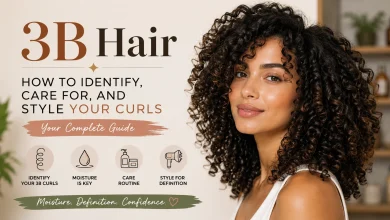
You can test your porosity with a simple float test: take a few shed hairs and place them in a glass of water. If they float after a few minutes, you’re likely low porosity. If they sink quickly, you’re likely high porosity. Once you know your porosity, pair it with your curl type for a fully dialed-in routine. Our guide on 3B hair type is a useful reference if you’ve been wondering whether your curls are tighter than typical 3A.
3A Hair Styling Tips and Hairstyle Ideas
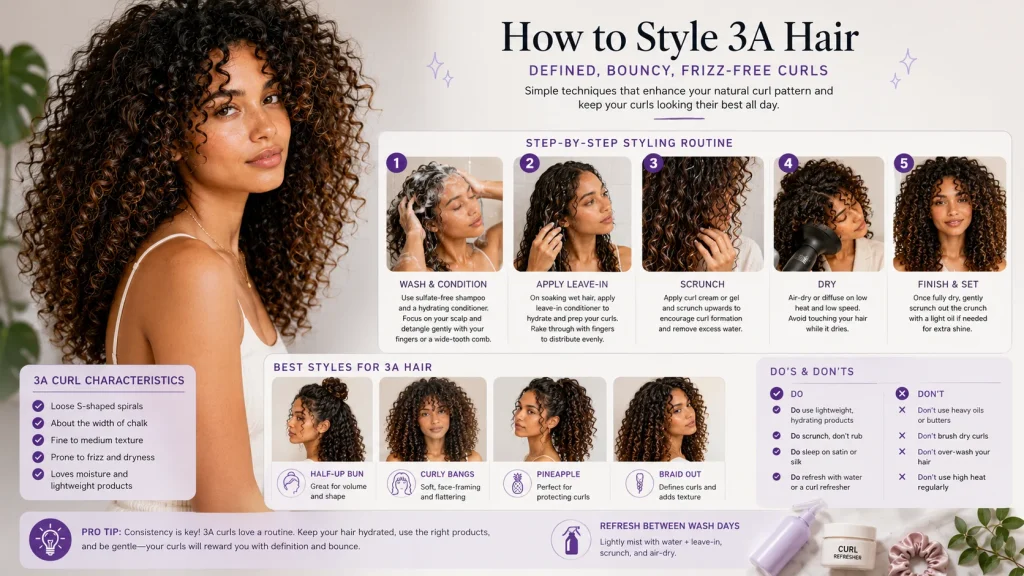
3A curls are naturally versatile and suit a wide range of styles. They hold volume for buns and space buns, they coil enough for loose braids, and they look gorgeous worn free. The key rule across every style: work with the curl pattern, not against it.
Free curls are the best showcase of natural 3A texture. Apply your products on soaking wet hair, scrunch, and then leave them alone until fully dry. Touching your curls while they’re drying breaks the clumping (the way curls group together for definition) and creates frizz. Once dry, use your hands to gently separate any sections that look too clumped together.
Pineapple is the protective style that every 3A person should know. Gather your hair into a very loose, high ponytail on top of your head before bed, secured with a scrunchie (never a rubber band). In the morning, take it down, shake gently, and your curls are mostly intact. Add a small spritz of water and scrunch if needed.
Space buns use the natural volume of 3A hair to create full, round shapes. They work particularly well on second or third day hair when curls have softened slightly.
Low bun or ponytail works well on day two or three hair. Use a scrunchie or a coil hair tie to avoid creating dents or breakage in your curl pattern.
Side braids are ideal for day three or four when your curls have relaxed. They look intentional and styled without requiring products.
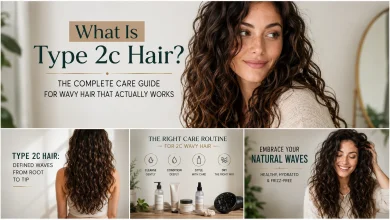
What to avoid: brushing dry curls (this creates frizz and breaks the curl pattern), using a regular terry cloth towel (use a microfiber towel or a cotton T-shirt instead to reduce friction), and touching your hair while it’s drying. Also avoid going to bed on wet or damp hair; it causes friction and loses definition overnight. If you’ve ever thought your hair might actually be type 2C hair rather than 3A, that article has a side-by-side breakdown of what separates the two curl patterns.
Frequently Asked Questions
What is the difference between 3A and 2C hair?
2C is wavy and doesn’t form a true spiral. It creates soft S-shapes that lie relatively flat. 3A forms a defined loose S-shaped spiral that coils consistently from root to tip. When wet, both can look similar. The test is letting your hair dry fully without touching it. If it forms a repeating spiral, you’re 3A. If it waves but doesn’t coil, you’re 2C.
How often should I wash 3A hair?
Wash 3A hair two to three times per week. Daily washing strips the natural oils your curls need to stay defined and moisturized. Waiting longer than four days leads to product buildup that weighs curls down and flattens the pattern. Between wash days, refresh with a light water and leave-in conditioner spritz, then scrunch gently.
Why does my 3A hair lose its curl definition by the end of the day?
The most common cause is applying products to hair that isn’t wet enough. Apply your leave-in and curl cream to dripping wet hair, not just damp. Other causes include humidity lifting the cuticle, product buildup from silicones, or products that are too heavy for your curl type. Switch to lighter formulas and apply to wetter hair first.
Can I use heat on 3A hair?
Yes, occasionally, with a heat protectant applied before any heat tool. Diffusing on low heat is always the better option over direct heat because it distributes airflow evenly without disrupting the curl pattern. Limit flat iron or straightener use to a few times per month. Repeated high heat causes the disulfide bonds in curly hair to relax permanently over time.
What is the LOC method for 3A hair?
LOC stands for Liquid, Oil, Cream. Apply a water-based leave-in conditioner first, then a lightweight oil to seal it, then a curl cream on top. The layering order matters because each product locks in the previous one. For drier 3A or high porosity hair, LOC works well. For low porosity 3A, try LCO (Liquid, Cream, Oil) with the oil last as a lighter sealant.
Conclusion
Getting 3A hair right comes down to three things: identifying your actual curl type so you follow advice that’s built for your pattern, building a hydration-first routine with sulfate-free products, and using only lightweight products that let your natural spiral do its thing.
3A hair responds quickly when you give it what it actually needs. Give your new routine four to six weeks and you’ll see the difference. Your curls didn’t fail you; you just hadn’t found the right system yet. If you want to keep exploring how curl types compare, our guides on 3B hair type and type 1C hair are a good next read for understanding where you sit on the full curl spectrum.